What actually fails on a fleet vehicle's transmission. A drivetrain failure guide from a Denver transmission specialist.
Updated May 1, 2026
Transmission failure on a work truck is the worst kind of downtime. Multi-thousand-dollar repair, week-plus out of service, and most of the warning signs were ignorable for months before the truck finally stopped moving. This guide covers what actually fails on fleet drivetrains, why duty cycle matters more than mileage, what your drivers should report immediately, and the math on prevention versus reactive repair.
Don's Garage at 5515 Washington Street in north Denver has been rebuilding transmissions since 1970 — three generations of mechanics, transmission specialty since the start. Fleet customers come to us with the same handful of problems over and over because the underlying physics are the same: heat, load cycles, and idle time wear fleet drivetrains in ways retail use never does. This guide is what we wish every fleet manager understood before they got their first transmission quote.
It pairs with our consumer transmission guide, but the two pages cover different ground. The consumer guide focuses on how to evaluate any shop's transmission quote. This fleet guide focuses on fleet operations — duty cycle, driver training, and the failure modes specific to commercial use.
Why fleet transmissions fail differently.
Manufacturer transmission longevity claims assume normal-duty driving — moderate mileage, light loads, highway commuting. Fleet usage breaks every assumption in that model. Three duty-cycle factors compound on fleet vehicles in ways they don't on retail vehicles:
Heat.
Transmissions live or die on fluid temperature. Heavy loads, towing, frequent stops, prolonged idle — all of these heat transmission fluid past its design tolerance. Fluid that runs consistently above 200°F degrades 2x faster than fluid running at 175°F. Fluid that runs above 240°F is essentially being cooked. The American Trucking Association reports that overheating accounts for nearly 15% of all transmission-related breakdowns in commercial diesel trucks.
Load cycles.
A retail driver might tow once a year. A fleet truck tows constantly, hauls daily, and operates at the upper end of its rated capacity. Each high-load cycle adds wear that retail vehicles never see. Light- and medium-duty work trucks (Class 2-6) are particularly vulnerable because they're often using transmissions derived from automotive designs that weren't engineered for vocational fleet duty.
Idle time and short cycles.
Service trucks, bucket trucks, delivery vans — these run high idle hours, frequent restarts, dense urban routes. Each pattern is worse for transmissions than highway driving. Idle time generates heat without airflow to cool it. Frequent shifts wear clutch packs and torque converter components faster than steady-state highway operation.
The result: a transmission that the manufacturer rates for 150,000-200,000 miles in normal use can fail at 80,000-120,000 miles in fleet duty if the maintenance schedule doesn't account for severe-duty conditions.
The five most common fleet drivetrain failures.
1. Torque converter failure.
The most common single failure point on automatic transmissions in fleet vehicles. The torque converter sits between the engine and the transmission, transferring power and managing the multiplication of torque at low RPM. In fleet duty — heavy loads, frequent stops, prolonged idle — the converter clutch glazes, the stator wears, the lockup function fails, or the converter starts breaking down internally. Symptoms: shuddering at cruising speeds, vibration under load, slipping during acceleration, transmission running hotter than normal. Cost: $1,500-$3,500 to replace the converter, often combined with a transmission service or full rebuild if the failed converter contaminated the fluid with debris.
2. Clutch pack wear (in automatics).
Modern automatic transmissions use multiple clutch packs to engage different gear ratios. Heavy load cycles wear the friction material on these clutches. The first sign is delayed engagement when shifting from park to drive (a 2-3 second delay before the truck pulls), or harsh shifts under load. Once wear progresses, the transmission slips — engine RPM climbs but the truck doesn't accelerate proportionally. Cost: $2,500-$4,500 for a rebuild that replaces clutch packs, seals, and bands. If caught early via fluid analysis (metal particulates in the pan), can sometimes be addressed with a filter and fluid service before a full rebuild is needed.
3. Cooler line failures and fluid leaks.
Transmission fluid runs through external cooler lines (typically routed to the radiator or a dedicated transmission cooler). Lines fail at the fittings, develop pinhole leaks at high-vibration points, or get cracked by debris. A fleet truck losing transmission fluid faster than it's being topped up can run low without obvious external leaks (some lines drip onto exhaust components and burn off). Result: transmission running with insufficient fluid, overheating, internal damage. Symptoms: spots in the parking spot that weren't there yesterday, hot transmission warning, transmission slipping or lurching. Cost: $200-$800 for cooler line repair, but undetected leaks that lead to internal damage push the bill into the $3,000-$5,000 range.
4. Transfer case and differential failures (4WD/AWD vehicles).
Fleet pickups and SUVs in 4WD see transfer case wear from heavy-duty operation. Transfer case actuators fail (especially on F-150 and Silverado platforms around 100,000 miles in fleet use), shift forks wear, chains stretch on chain-driven cases. Differentials fail less commonly but more catastrophically — usually from missed fluid changes, occasional from impact damage. Symptoms: 4WD won't engage or won't disengage, grinding noises from the differential, vibration that increases with speed. Cost: $400-$1,200 for transfer case actuator, $1,500-$3,500 for transfer case rebuild, $1,000-$2,500 for differential rebuild.
5. Solenoid and electronic control failures.
Modern transmissions use multiple solenoids to control fluid flow and shift timing. Solenoids fail from heat, contamination, or electrical issues. Symptoms: transmission stuck in one gear (often "limp mode" where it stays in 2nd or 3rd to limit damage), erratic shifting, check-engine light with transmission-specific codes. Cost: $300-$800 for a single solenoid replacement, $1,200-$2,500 if the entire valve body needs replacement. Often confused with full transmission failure — a competent diagnostic separates a $500 solenoid problem from a $4,000 rebuild.
Duty cycle drives the failure curve.
A landscaping truck pulling trailers all day is not the same as a sales rep's F-150. They have different transmission service intervals, different failure modes, and different replacement cost projections. Duty cycle matters more than mileage.
Light-duty fleet (sales fleets, supervisor vehicles).
Lowest stress on the drivetrain. Mostly highway commuting, no towing, no heavy loads. Transmission service every 60,000 miles is reasonable. Expect 200,000+ miles before drivetrain repairs become significant. F-150, Silverado 1500, RAM 1500, fleet sedans all fall into this category when used as light-duty vehicles.
Medium-duty fleet (delivery vans, service trucks).
Heavier stress from frequent stops, idle time, and moderate loads. Transmission service every 30,000-50,000 miles. Expect first major drivetrain repair around 130,000-170,000 miles. Ford Transit, Sprinter, ProMaster, Chevy Express, and similar cargo vans fall here. Bucket trucks and service vans with PTO operation push to the heavier end of this category.
Heavy-duty fleet (towing, hauling, construction).
Highest stress on every drivetrain component. Transmission service every 30,000 miles, no exceptions. Expect first major drivetrain repair around 100,000-130,000 miles in pure tow/haul duty. F-250/F-350, Silverado 2500/3500, Ram 2500/3500 all see this duty cycle when pulling trailers regularly. Diesel variants reward consistent maintenance with 250,000+ mile service lives but punish neglect with $8,000-$15,000 rebuild bills.
Severe-duty fleet (construction, towing operations, snow plowing).
Maximum stress. Transmission service every 20,000-30,000 miles. Expect drivetrain repairs starting around 80,000-120,000 miles. Snow plow trucks, dump trucks, heavy hauling fleets. These vehicles often need auxiliary transmission coolers added beyond factory specs to keep fluid temperatures in safe range.
What drivers should report immediately.
The cheapest transmission repair is the one caught while it's still small. Train your drivers to report any of the following the same shift they notice it. A sticker on the dash or a one-page handout in the cab pays for itself the first time it prevents a tow.
- Slipping during acceleration (engine RPM climbs but the truck doesn't accelerate proportionally)
- Delayed engagement (more than 1-2 seconds between shifting to drive/reverse and the truck pulling)
- Harsh shifts under load (transmission jerks or bangs into gear)
- Transmission running unusually hot (warning light, dashboard temp gauge in the red)
- Burning smell (overheated transmission fluid has a distinct burnt-toast smell)
- Fluid spots in the parking area that weren't there yesterday
- Whining, grinding, or clunking noises from underneath the truck
- Transmission stuck in one gear ("limp mode") or refusing to shift
- Check-engine light combined with any of the above
- Vibration at cruising speeds that increases with engine load
- Difficulty engaging or disengaging 4WD (on 4WD vehicles)
- 4WD warning lights or messages
- Difficulty engaging reverse (a pause before the truck moves backward)
Most of these signal a small problem catchable for $300-$1,500 if addressed within a week. Ignored, the same problems progress to $3,000-$8,000 rebuilds plus a week of downtime. The math always favors immediate reporting.
Fluid service intervals by duty cycle.
Transmission fluid is the cheapest insurance against transmission failure. These intervals are research-grounded and match what we recommend across our fleet customers' vehicles. They are NOT manufacturer "lifetime" claims — those don't apply to fleet duty.
Automatic transmissions, light-duty.
Service every 50,000-60,000 miles. Includes drain, fluid replacement, filter (if accessible), and pan inspection. Cost: $150-$300 typical. Catches early wear via metal particulates in the dropped fluid.
Automatic transmissions, medium-duty.
Service every 30,000-50,000 miles. Same scope as light-duty, but with extra attention to cooler line condition and fluid temperature operation. Some medium-duty vans benefit from auxiliary cooler additions if they run heavy or in hot conditions.
Automatic transmissions, heavy-duty.
Service every 30,000 miles, flat. Don't extend. Heavy-duty trucks under fleet duty hit transmission damage thresholds faster than the math suggests.
Diesel transmissions (Allison, Powerstroke, Cummins-mated).
Allison transmissions in 2500/3500 GMs and Cummins-mated 6-speeds in Rams are robust but reward strict service. Every 30,000 miles. Diesel transmissions also need cooler line inspection and filter changes more frequently than gasoline counterparts because diesel torque puts more stress on every drivetrain component.
Manual transmissions (rare in modern fleets but still common in older heavy-duty).
Gear oil change every 60,000-90,000 miles. Clutch wear is the bigger consideration — clutches in fleet duty typically last 80,000-150,000 miles depending on driver habits and duty cycle.
Transfer cases and differentials.
Fluid replacement every 50,000-60,000 miles for fleet duty. Transfer case fluid sees more thermal stress than people think. Differentials in 4WD vehicles benefit from same-interval service.
Fluid service, rebuild, or replacement — knowing the difference.
Three different service categories address three different problem severities. Fleet operators benefit from understanding which they actually need before getting a quote.
Fluid service ($150-$500 typical).
Drains old fluid, replaces filter (if accessible), refills with fresh fluid, inspects pan for metal debris. Addresses early-stage wear and prevents future damage. Should be on every vehicle's regular maintenance schedule.
Rebuild ($2,500-$5,500 for most fleet vehicles).
Transmission removed, disassembled, all wear components replaced (clutches, bands, seals, gaskets, sometimes the torque converter), reassembled, reinstalled, fluid filled. Restores the transmission to like-new condition. Right call when individual components have failed but the case, gears, and core hardware are still good. Don's specialty since 1970.
Replacement ($3,500-$8,000 for most fleet vehicles).
Old transmission removed, replaced with a remanufactured or new unit, fluid filled. Right call when the case is cracked, the gears are damaged beyond rebuild scope, or the time-to-repair matters more than the per-unit cost (a remanufactured unit installed faster than a rebuild done in-shop). Sometimes the right call for fleet operators who need the truck back fast.
How to know which you need.
A competent transmission shop will diagnose before quoting. If a shop quotes a rebuild without putting the transmission on the lift, walk away. The diagnostic should include a road test, a pan drop to inspect debris, and ideally a fluid analysis if catastrophic failure isn't already obvious. The diagnosis determines the right service category — getting that wrong costs fleet operators thousands of dollars.
How Don's helps fleet customers with drivetrain work.
Transmission and drivetrain work is Don's specialty. Family-owned since 1970, three generations of mechanics, transmission focus from the start. Most general repair shops have to send transmissions out for rebuild — Don's rebuilds in-house, which means faster turnaround and direct quality control.
When a fleet customer's truck comes in with a transmission concern, the diagnostic process is the same one we'd want on our own equipment: road test to confirm the symptom, pan drop to inspect fluid and debris, sometimes fluid analysis if the situation calls for it, only then a quote with options. We tell you what we found, what your options are, what each costs, and what we'd recommend if it were our truck. You decide.
Fleet customers can also ask about priority booking on transmission work. A fleet truck with a confirmed transmission problem can often move up the queue ahead of retail walk-ins because we understand the downtime cost. Drop-off in the morning, target back on the road within the week for most rebuilds — usually faster than general repair shops that send transmissions out to a third-party builder.
Want a second opinion on a transmission diagnosis?
If a shop has quoted you $4,000-$8,000 for transmission work on a fleet vehicle and you want a second opinion before committing, bring it to Don's. We'll diagnose from scratch — road test, pan drop, fluid inspection — and tell you straight what we'd do. Sometimes that confirms the original diagnosis. Sometimes it surfaces a $500 solenoid problem that was being quoted as a $4,000 rebuild. Either way, you get clear information before spending real money.
More from the fleet content engine.
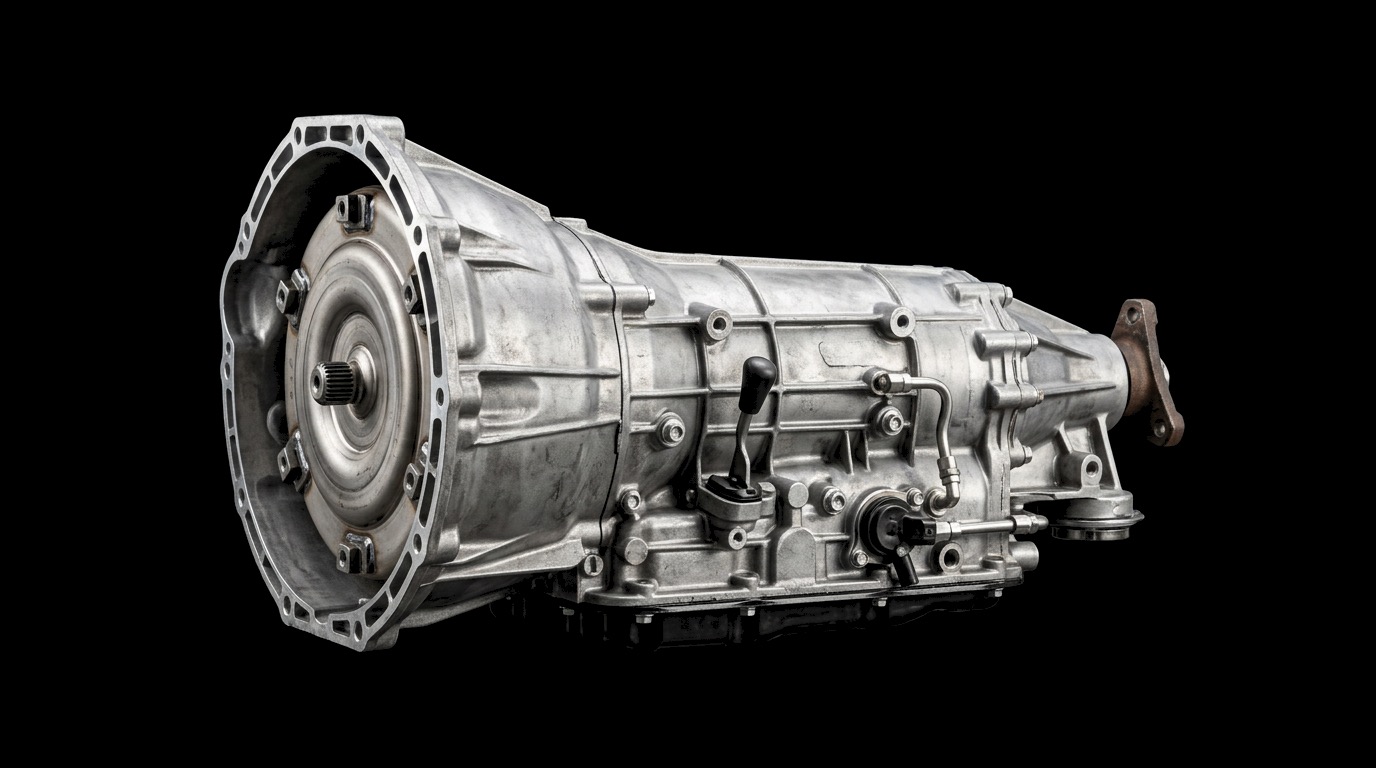
Our transmission specialty
50+ years of focus, in-house rebuilds, fleet priority booking.
See transmission services →
Severe-duty PM intervals
The maintenance schedule that prevents most transmission failures.
See the schedule →
What's downtime actually costing you?
Run the math on a transmission failure plus the resulting week of downtime.
Use the calculator →Transmission specialty since 1970.
Family-owned in north Denver, three generations of mechanics, in-house rebuilds. Bring us your fleet's transmission problem — or a quote you want a second opinion on. No commitment, no hard sell.