Fleet maintenance for the shops, trucks, and vans keeping Denver moving.
Don's Garage Automotive and Transmission has been keeping work vehicles on the road in north Denver since 1970. Three generations of mechanics, located right in the I-70/I-25 industrial corridor — minutes from Globeville, Elyria-Swansea, Cole, and Commerce City. We specialize in transmission and drivetrain work, the repairs that take other shops out for a week and yours out for a day.
Why fleet managers choose Don's.
We're physically where your trucks are.
5515 Washington Street puts us inside the I-70/I-25 industrial corridor — the same corridor where most north Denver fleets operate. If your shop is in Globeville, Elyria-Swansea, Cole, or Commerce City, you're 5-15 minutes away. Drop a truck off in the morning, pick it up the same day. No more shuttling vehicles across town to a strip-mall mechanic.
Transmission specialty — the repair that takes everyone else a week.
Transmission failure on a work truck is the worst kind of downtime. A general repair shop has to send the unit out, wait for parts, wait for a slot. We rebuild transmissions in-house, three generations deep. Family-owned since 1970, transmission specialty since the start. We know the failure modes for the most common fleet vehicles — Ford Transit, F-250/350, Sprinter, ProMaster, Silverado, Express vans. The work that takes other shops a week takes us 3-5 days, and we'll tell you straight whether a rebuild or a replacement is the right call before we start. See our fleet transmission and drivetrain guide for what actually fails on fleet vehicles, duty-cycle service intervals, and what to train your drivers to report.
We've been here for 50+ years. We'll be here when your warranty work needs us.
Family-owned since 1970, three generations of mechanics, same location. Fleet managers planning multi-year vehicle budgets need shops that are still going to be in business when the warranty claim happens. We will be.
What we do for fleet customers.
Don's services the most common fleet vehicle classes — gasoline and diesel, half-ton through one-ton, vans, pickups, box trucks, and specialty service vehicles. Light-duty and medium-duty work trucks are our wheelhouse. Heavy-duty Class 7-8 over-the-road tractors are outside our scope — for those, we'll point you to a heavy-duty specialist.
Transmission and drivetrain.
The specialty. Rebuilds, fluid services, torque converter work, transfer case repair, differential service, axle work. The repairs most fleet operators dread because they signal a major bill — handled in-house, faster than typical, with options explained before the work starts.
Engine repair and replacement.
Diagnostics, repairs, full engine replacement when needed. Cooling system work, fuel system service, electrical diagnostics, sensor work. Most engine issues come down to repair or replacement, and we handle both end-to-end.
Brake systems.
Pads, rotors, calipers, lines, master cylinders, ABS work. Critical for any work vehicle, especially one that's loaded down all day.
Suspension and steering.
Shocks, struts, ball joints, tie rods, alignments. Work trucks beat their suspension. We see it constantly.
Preventive maintenance.
Oil changes, transmission services, coolant flushes, brake fluid changes, differential services. Scheduled by mileage interval for each vehicle in your fleet. The math on PM is brutal: $300 in fluid changes prevents a $4,000 transmission failure six months later. We can build a maintenance schedule for your specific fleet vehicles and remind you when each is due. See our fleet maintenance schedule by vehicle class for the severe-duty intervals we recommend across the most common fleet vehicles.
Diagnostics and pre-purchase inspections.
If you're considering adding a used truck to the fleet, we'll inspect it before you sign anything. Bring it by, we put it on the lift, you get a written report on its actual condition. Avoid buying someone else's problem.
How fleet relationships actually work here.
Fleet customers care about predictable processes, not slogans. Here's what to expect when you work with us.
Single point of contact.
Whoever books the work for your first truck can keep handling your account whenever possible. They get to know your vehicles, your schedules, your preferences. Fleet managers don't want to re-explain their operation every time a truck comes in.
Transparent communication.
When a truck comes in, we'll call with the diagnosis before we start work — with the price, the timeline, and the options. If we find more during the work, we call you again. No surprise bills.
Scheduled service slots.
If you can plan PM in advance, we can schedule it during slower windows so your trucks aren't waiting for service bays. We can prioritize fleet booking when you need it.
Records you can use.
Every service comes with itemized documentation — what was done, what parts, what labor, mileage at service, recommendations for next visit. Useful for your fleet records, useful for resale value when you eventually rotate the vehicle out.
No surprises pricing.
We can't quote a transmission rebuild without putting it on the lift. But we'll give you the worst-case quote before we start — you'll know the upper bound, and we'll only charge that if we hit the worst-case scenario. Most jobs come in under.
Vehicle classes we work on.
We focus on the work-vehicle classes fleet operators actually run — light-duty and medium-duty, gas and diesel.
- Cargo vans: Ford Transit, Mercedes Sprinter, RAM ProMaster, Chevrolet Express, GMC Savana
- Light-duty pickups: Ford F-150, Chevy Silverado 1500, RAM 1500, Toyota Tacoma, Toyota Tundra
- Heavy-duty pickups: Ford F-250 / F-350, Chevy Silverado 2500/3500, RAM 2500/3500
- Box trucks and cube vans up to medium-duty
- SUVs used as fleet vehicles: Suburbans, Tahoes, Expeditions
- Service vehicles: contractor pickups, plumbing trucks, HVAC vans, electrician vans, landscaping trucks
- Sedans and compact vehicles for sales fleets
Heavy-duty Class 7-8 over-the-road tractors are outside our scope. Everything below that, we handle.
The real cost of downtime.
Most fleet operators only count the repair bill when a vehicle goes down. The actual cost is much higher.
Industry research from Element Fleet puts daily downtime cost at $448 to $760 per vehicle, depending on the use case. That includes lost revenue, driver wages paid for nothing, rental replacement vehicles, missed delivery penalties, and the labor your dispatch puts into rerouting around the missing truck. A single truck out for a week is $2,200 to $3,800 in true cost — on top of whatever the repair itself is.
The math on preventive maintenance changes when you count downtime correctly. A $300 transmission fluid service prevents a $4,000 rebuild AND saves you 5-7 days of downtime — easily another $2,500-$5,000 in real cost. Spending $300 to prevent $6,000+ is a no-brainer when you do the math right.
We help fleet customers do the math right. Ask us about a maintenance schedule for your specific vehicles — we can tell you what's likely to fail at what mileage, what the prevention costs versus the failure costs, and which interventions have the best return.
Want to run your specific numbers? Use our free fleet downtime cost calculator — it'll show you what downtime is actually costing your fleet annually based on your fleet size, daily revenue per vehicle, and current downtime days.
Where we serve fleet customers.
5515 Washington Street is in the heart of north Denver's industrial corridor. We routinely serve fleet customers from Globeville, Elyria-Swansea, Cole, the Five Points area, Commerce City, the I-70 corridor east, and the I-25 corridor north. If your fleet operates within 15 miles of our shop, you're in our regular service zone.
Fleet customers running CDL or non-CDL commercial vehicles can also reference our DOT inspection readiness checklist for what to keep ready between inspections.
Let's talk about your fleet.
If you're managing 5-50 vehicles and tired of the back-and-forth with shops that don't know your trucks, give us a call. We'll come out and look at your fleet, talk through what you've got, and figure out whether we're the right shop for the work. No commitment, no hard sell. The first conversation is just two parties figuring out if we make sense for each other.
Where the fleet work lives.
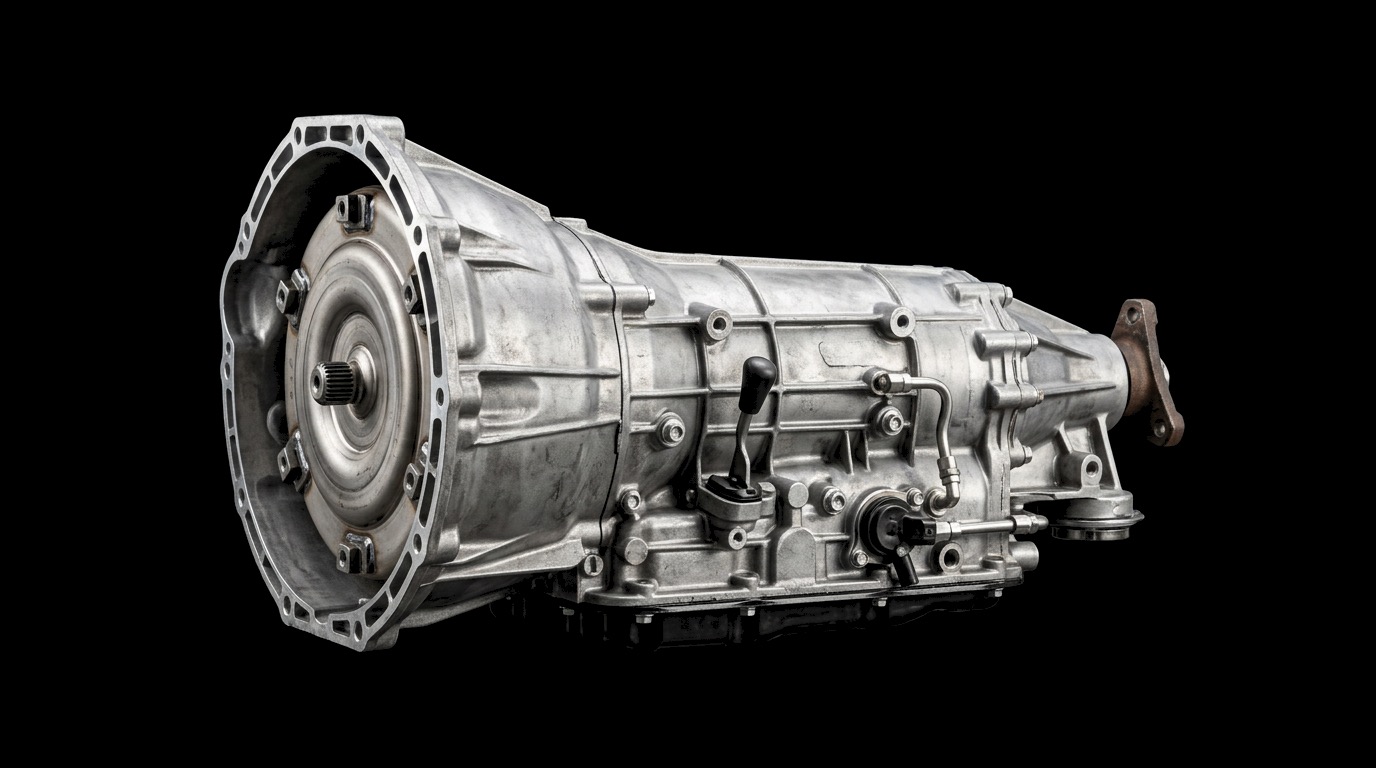
Our transmission specialty
Where 50+ years of focus translates directly into fleet uptime.
See transmission services →
Fleet vehicle nearing end of life?
Run the math on whether to keep fixing it or rotate it out.
Use the calculator →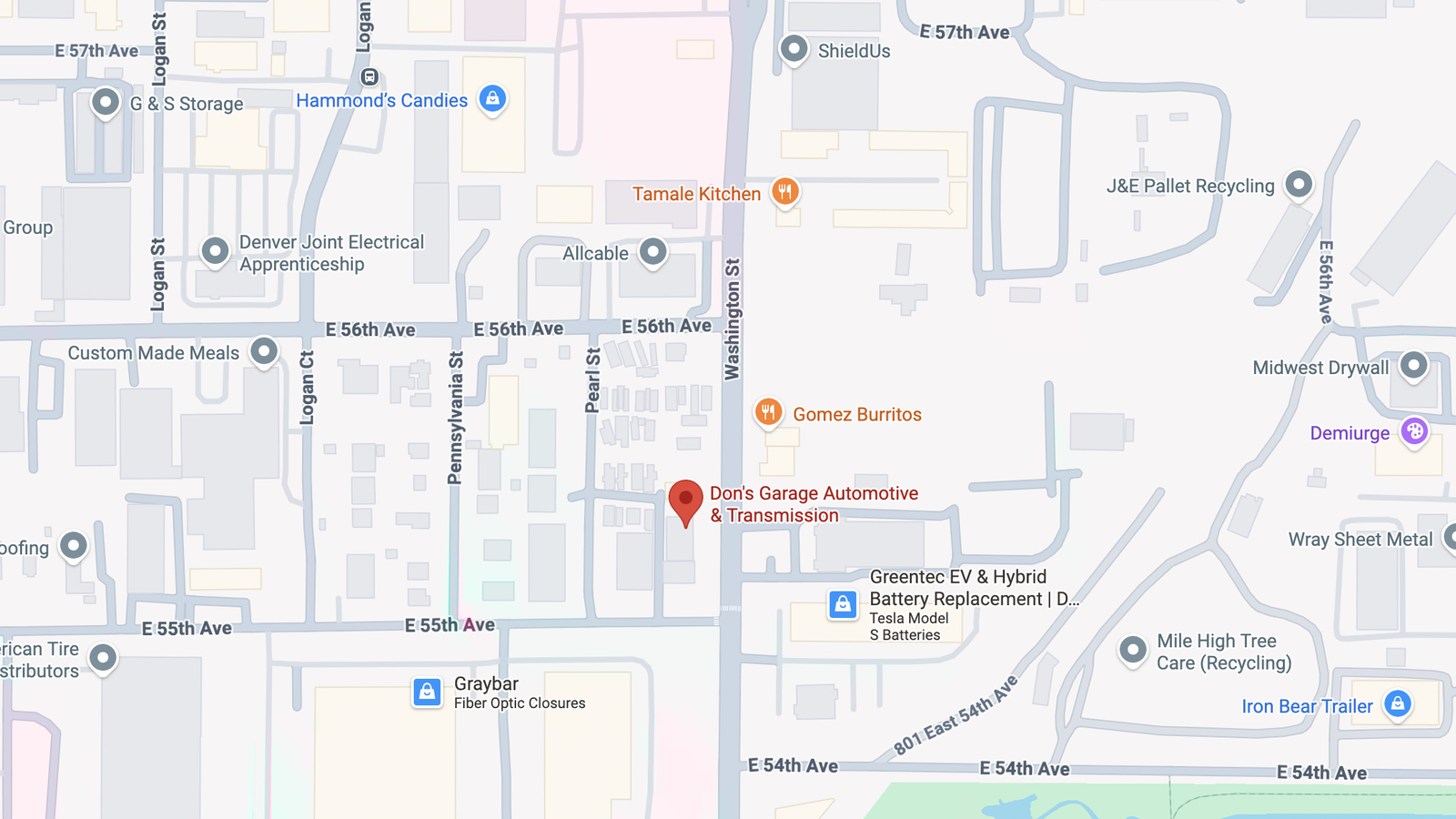
Drop by the shop
5515 Washington Street, Denver. We're easy to find — right off I-70.
Get directions →Vehicle-specific fleet questions we get most.
Specific make/model maintenance patterns based on what we see across Denver fleet customers.
Ford Transit fleet maintenance schedule — what intervals?
Transit vans in fleet duty hit transmission service requirements faster than retail intervals. We recommend transmission service every 30,000-40,000 miles for medium-duty Transit fleets, every 50,000 for light-duty. Engine oil every 5,000-7,500 miles depending on idle time. Brake service typically at 50,000-70,000 miles for delivery routes. Call us to build a fleet-specific schedule.
Mercedes Sprinter fleet service Denver?
Sprinters in fleet duty need diesel-specific attention — fuel filter every 20,000 miles, transmission service every 30,000, def system maintenance per manufacturer spec. Most fleet Sprinters we service are 2014+ with the OM651 diesel; common issues include glow plug failure (~80,000 miles) and turbo actuator wear. We can coordinate scheduled maintenance so trucks rotate through during slower fleet operating windows.
F-250 / F-350 fleet — what services matter most?
Heavy-duty F-Series in fleet duty live or die on service discipline. Transmission service every 30,000 miles flat. Diesel oil and fuel filter changes per Powerstroke spec (or sooner under high-idle service truck duty). Front-end suspension work is constant on plow trucks and heavy-haul fleets. We service dozens of F-250/F-350 platforms — bring yours in for a baseline assessment.
Chevy Silverado 1500 fleet maintenance?
Silverado 1500 light-duty fleet vehicles (sales fleets, supervisor trucks) are among the most reliable platforms when serviced consistently. Typical fleet schedule: oil every 5,000-7,500 miles, transmission service every 50,000-60,000, brake service every 40,000-60,000, suspension work as needed. Most Silverado 1500s in light-duty fleet use hit 250,000 miles before major drivetrain repair becomes likely.
RAM ProMaster fleet vans — common issues?
ProMasters are FCA's commercial van platform; we see them mostly in delivery and contractor fleets. Common service items: 9-speed transmission service (critical — these wear faster than older 6-speeds), front strut wear from heavy front-end loading, electrical gremlins around the body control module on high-mileage units. Service every 30,000 miles transmission, 50,000 brakes, 60,000 suspension assessment.
Chevy / GMC Express / Savana fleet vans?
The Express / Savana platform is a fleet workhorse with the 6L90 transmission and either 4.3L V6 or 6.0L V8 gas engines. Fleet customers typically run these to 250,000+ miles with proper service. Transmission service every 50,000 miles, brake service every 50,000-70,000, suspension work as the fleet ages. Don's services Express/Savana fleets across north Denver delivery and contractor companies.
Heavy-duty 2500/3500 diesel fleet — Cummins, Powerstroke, Duramax?
Each diesel platform has its own quirks. Cummins (RAM HD): rock-solid block but transmission and front-end need attention. Powerstroke (Ford): 6.7L modern variants are reliable when fluid services are strict; the EGR/DPF systems need attention in fleet idle duty. Duramax (Chevy/GMC): Allison transmissions are bulletproof when serviced; injectors are the common high-mileage failure point. Each requires specific maintenance schedules — call us to talk through your specific fleet mix.
Fleet maintenance you can actually plan around.
Family-owned in north Denver since 1970, three generations of mechanics. Drop us a call to talk about your fleet — no commitment, no hard sell.